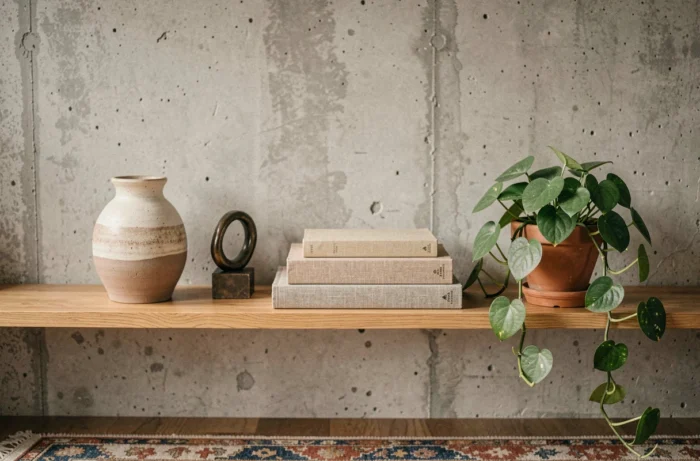
A decorative object is distinguished from a piece of furniture by its primary function: to create a visual or sensory effect in a space, without an immediate utilitarian necessity. Wall accessories, ceramic pieces, ambient lighting, or ornamental textiles fall into this category. Choosing these elements methodically allows for transforming a room without engaging in heavy renovations, provided one understands a few principles of composition and materials.
Emissions and materials: what the European regulation changes for decorative objects
Typical content on interior decoration focuses on style and trends. A much less addressed aspect concerns the chemical composition of the accessories we install in our homes.
The European REACH regulation has recently imposed stricter limits on formaldehyde emissions from finished products sold in the European Union. This constraint does not only affect wooden panel furniture: it also covers certain textiles, plastics, and composite materials used in the manufacturing of decorative objects.
Specifically, a photo frame made of MDF, a plywood tray, or a basket made of synthetic fibers may be affected. Manufacturers must measure emissions on the finished product, not just on the raw material. This technical detail has direct consequences on the choice of an accessory for a bedroom or an office, spaces where air renewal is often limited.
At the same time, the ESPR regulation (Ecodesign for Sustainable Products Regulation) is preparing specific requirements for furniture and certain interior objects. It introduces criteria for traceability, recycled content, and measurable durability. To find accessories designed within this framework, specialized platforms for handmade creations already offer small series pieces with documented materials, such as on https://www.marie-carotte.fr/ which brings together this type of approach.

Small series decorative accessories: why prioritize handmade pieces
A fundamental trend is strengthening around so-called “circular” decorative objects made in limited quantities. The principle is based on three pillars: recovered or bio-sourced materials, local manufacturing, and the possibility of repair or reuse at the end of life.
This movement is not merely a marketing argument. It responds to a growing demand for transparency regarding the origin of materials, maintenance, and the end of life of products. A stoneware vase turned by a local ceramist, a framed mirror made with reclaimed wood, or a lamp made of hand-welded metal offers a longer lifespan than industrial equivalents, and their visual uniqueness creates a focal point in any room.
The practical interest also lies in decorative coherence. When each object has an identifiable manufacturing story, the assembly in a space produces a more personal effect than a batch of standardized accessories.
Concrete criteria for evaluating a handmade accessory
- The origin of the main material must be clearly indicated, not just the country of assembly but the actual source (certified wood, recycled metal, dormant stock textile)
- The surface finish should show no burrs or structural irregularities; slight variations in shade or texture are normal on a turned or hand-blown piece
- A repairable object is recognized by mechanical assemblies (screws, fittings) rather than permanent gluing
Visual composition: placing a decorative object in the right spot in a room
Accumulating original accessories is not enough. Their arrangement in the space determines the effect produced. A few principles of visual composition help avoid clutter and guide the eye.
The first concerns height. Placing objects only on horizontal surfaces (tables, shelves) flattens the perception of a space. Alternating placed pieces and wall elements (mirror, sconce, frame) creates a verticality that visually enlarges the room.
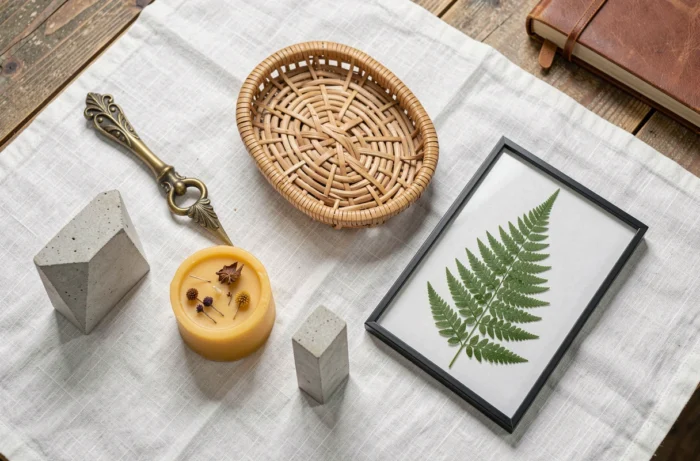
The second touches on grouping. An isolated object on a large piece of furniture appears lost. Grouping three elements of different heights creates a readable ensemble without a cluttered effect. This rule of odd numbers works for vases, candles, small sculptures, or decorative boxes.
The role of light in highlighting
A decorative accessory changes radically depending on the lighting it receives. A matte ceramic object absorbs light and gains presence near a directional source. An element made of glass or polished metal, on the other hand, reflects ambient light and works better in an already well-lit area.
Placing a task light (table lamp, low-voltage garland) near a group of objects is enough to create an evening ambiance without altering the general lighting. This type of localized light transforms an ordinary corner into a point of interest.
Mirrors and textiles: two categories of accessories with a strong decorative impact
Among all the decorative objects available, two families deserve special attention for their cost-to-visual transformation ratio of a space.
The mirror affects the perception of depth. Placed opposite a window, it redistributes natural light in the room. Set on the floor in a large format or hung in a group of varied formats, it structures a wall without requiring excessive drilling. The choice of frame (raw wood, black metal, aged brass) strongly influences the perceived style.
Decorative textiles (cushions, throws, table runners) offer the fastest method to modify the atmosphere of a room according to the season. Raw linen for summer, boucle wool for winter: changing textiles costs little and renews the ambiance without touching the furniture.
- A medium-sized mirror is sufficient for a hallway or entryway; large formats are reserved for living spaces where there is enough distance
- Interchangeable cushion covers allow for testing color combinations without a definitive commitment
- A throw placed on an armrest or the back of a chair adds a layer of texture visible even from a distance
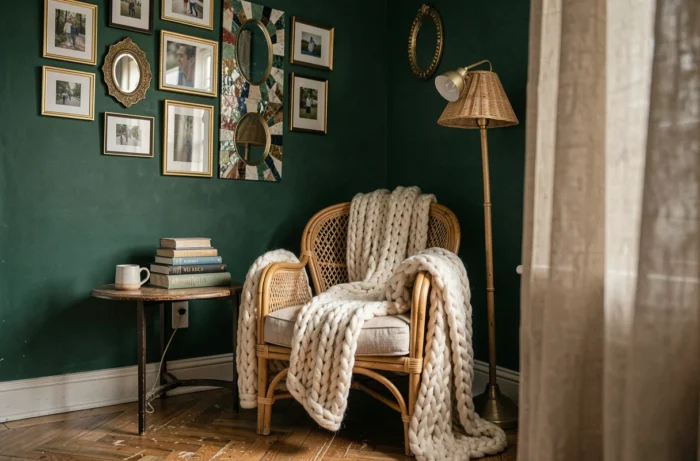
The choice of decorative objects and original accessories benefits from integrating criteria that go beyond pure aesthetics. The provenance of materials, compliance with new European emission requirements, and thoughtful placement in each room determine the difference between a simply furnished interior and a space where each element has its place and reason for being.