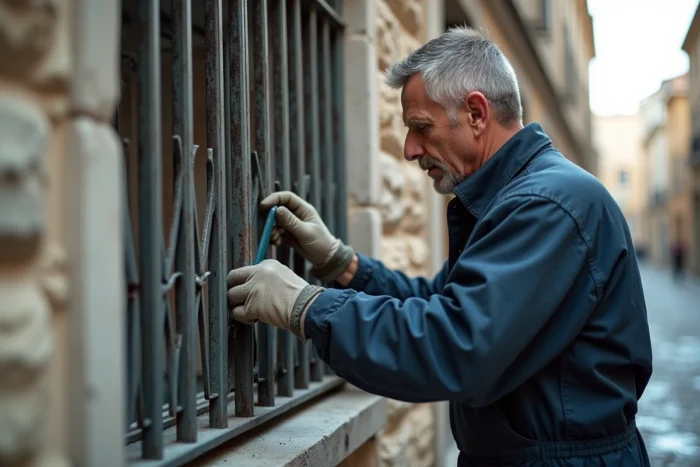
A steel defense grille placed in front of a ground floor window withstands everything: rain, frost, UV rays, mud splashes. After a few years, the first signs of rust appear, often in the corners or at the junctions with the wall. The good news is that the lifespan of a steel grille depends less on the material itself than on how it is protected and maintained.
Double protection galvanization and powder: the game-changing standard
You may have noticed that some grilles remain impeccable after years, while others rust in just a few seasons? The difference rarely lies in the model. It comes from the surface treatment applied at the factory.
The most effective system today combines two distinct layers. First, a hot-dip galvanization: the steel is immersed in a bath of molten zinc, creating a sacrificial barrier against corrosion. Then, an electrostatic powder coating (epoxy or polyester) seals the whole thing. This double layer, zinc followed by powder, is now presented as the standard configuration aiming for an outdoor lifespan exceeding twenty years with reduced maintenance.
Feedback on galvanized lacquered steel railings and outdoor structures confirms this logic: steel treated in this way can last between thirty and forty years on facades, provided that scratches and occasional impacts are monitored. A serious manufacturer of steel protection grilles will systematically offer this double protection, sometimes as an option on entry-level models.
If your current grille has only received a simple factory paint job, without prior galvanization, its resistance to corrosion will be significantly lower. Checking this point at the time of purchase avoids many disappointments.
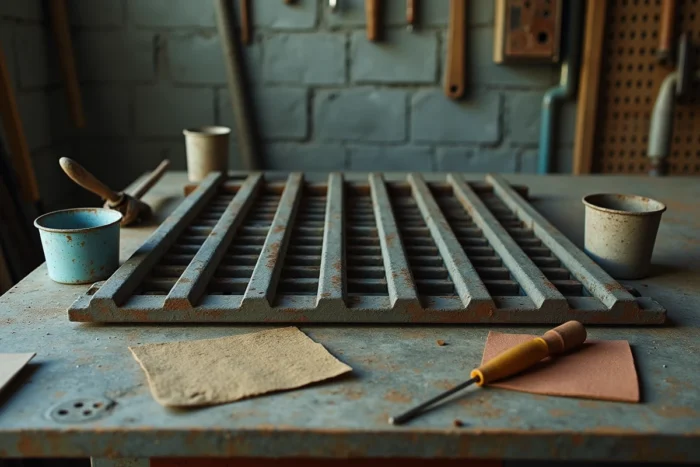
Identifying and treating rust on a steel grille before it spreads
Rust never starts “everywhere at once.” It first settles where water stagnates or where the coating has been compromised: an impact from a shutter, a poorly protected fixing screw, an angle in contact with damp masonry.
Priority inspection areas
- The fixing points in the wall, where moisture rises by capillarity and attacks the metal from the inside
- The welds and junctions between bars, often less well covered by the original treatment
- The lower part of the grille, exposed to rain splashes and dirt projections
A quick visual check once a year is enough to spot the first signs. An isolated rust spot, treated quickly, remains a minor issue. Left unattended for two or three years, it can weaken an entire bar.
Localized treatment: brush, rust inhibitor, paint
For a small rusted area, the method is simple. Scrub with a wire brush until you reach healthy metal. Then apply a rust inhibitor (rust converter), followed by a coat of special exterior metal paint.
Every untreated scratch is an open door to corrosion. A touch-up tube kept in the garage allows you to intervene as soon as a chip appears, without waiting for the next complete maintenance session.
Regular maintenance of defense grilles: cleaning and suitable products
Regular cleaning of a steel grille is not complicated, but it follows a few rules to avoid damaging the coating.
Use lukewarm water with a bit of mild soap or dishwashing liquid. A non-abrasive cloth or sponge is sufficient to remove dust, pollution, or limescale deposits. Rinse with clear water and let it dry.
What to avoid:
- High-pressure cleaners aimed at close range, which can chip the paint or powder coating
- Chlorine or acid-based products, which attack the zinc and finishes
- Abrasive sponges like “green scrubbers,” which scratch the surface and create corrosion initiation points
A gentle cleaning twice a year protects as much as many expensive treatments. In coastal or industrial areas, switch to three or four annual cleanings, as salty or acidic deposits accelerate degradation.
Powder coating or classic paint: which coating lasts longer
Powder coating involves projecting a resin powder onto the steel, then baking the whole thing in an oven. The result is a hard, uniform film without drips. This technique offers significantly better corrosion protection than liquid paint applied with a brush or spray gun.
Classic paint, even of good quality, eventually chips due to freeze-thaw cycles and UV exposure. Powder coating withstands these aggressions better, but it is not eternal either. Expect a lifespan significantly longer than that of standard paint, provided you do not leave impacts without touch-up.
If your grille is already installed and its coating shows signs of fatigue over a large area, a complete stripping followed by repainting is still possible. Prefer a special exterior metal rust-inhibiting paint, in at least two coats, after treating any signs of corrosion.
Fixation and contact with the wall: a wear point often overlooked
The grille itself may be perfectly maintained, but if its fixings rust or if contact with the masonry retains moisture, degradation will come from there.
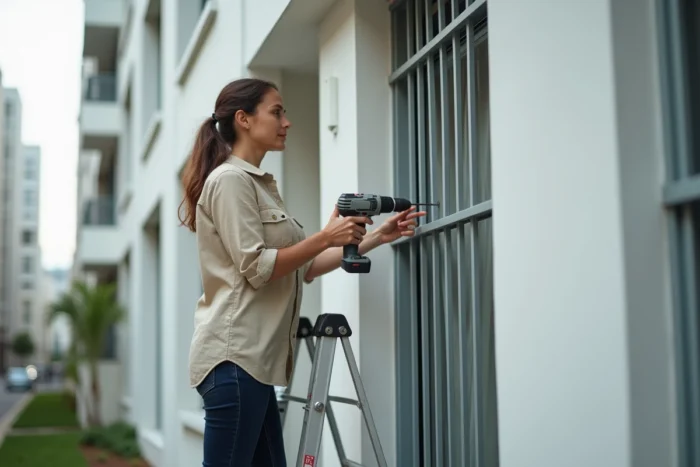
During installation, a silicone seal or insulating sleeve between the metal and the wall limits moisture transfer. Without this precaution, rainwater running down the wall infiltrates at the fixing point and attacks the steel from behind, where no surface treatment protects.
Check the condition of the anchors and sealing brackets every two or three years. A loose anchor creates a micro-space where water stagnates. Tightening or replacing a fixing takes just a few minutes and can prevent a complete grille replacement.
Steel is a forgiving material, as long as it is not left to fend for itself. A well-chosen grille from the start (galvanized and powder-coated), regularly inspected at sensitive points, and cleaned without aggressive products, will maintain its protective role and appearance for decades. The most expensive part is never the maintenance; it is the lack of maintenance.