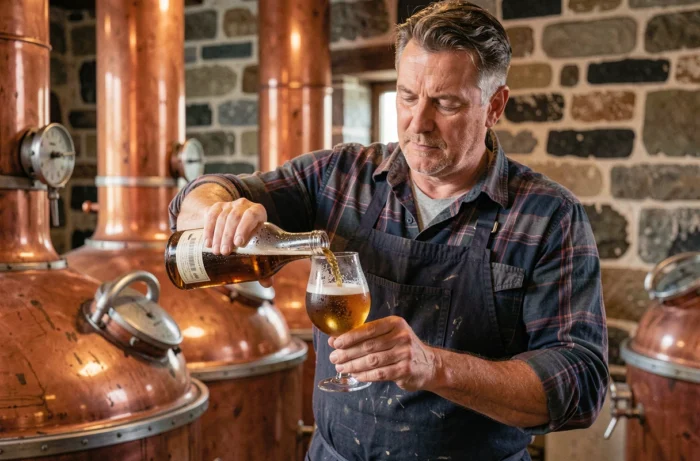
Brittany is among the French regions with the highest density of craft breweries. This concentration is not a coincidence: it is based on an ancient brewing tradition, a dynamic network of small businesses, and local raw materials that shape the aromatic profiles. The number of craft businesses in Brittany has increased by about +22% between 2019 and 2024, and microbreweries are fully contributing to this vitality.
Brittany Craft Beer: A Market That Has Reached Its Plateau
The Breton brewing landscape cannot be understood without the national context. After a decade of frenzied creations, the French craft beer market has stabilized since 2024 around 2,500 to 2,600 active breweries. In 2024, closures outnumbered openings: 159 closures compared to 82 new establishments, according to an analysis published by AllSpiritsAndMore.
This reversal of trend marks the end of a phase where simply opening a brewery was enough to find customers. In Brittany, the most established local structures are holding their ground, but selection is also taking place. Breweries that have not found their distribution network or their taste identity are disappearing.
To stay updated on the Breton sectors and local producers, the resources offered on breizheo.com help identify the players who structure this regional fabric.
Coreff, Lancelot, Sainte-Colombe: When Artisanal Changes Scale
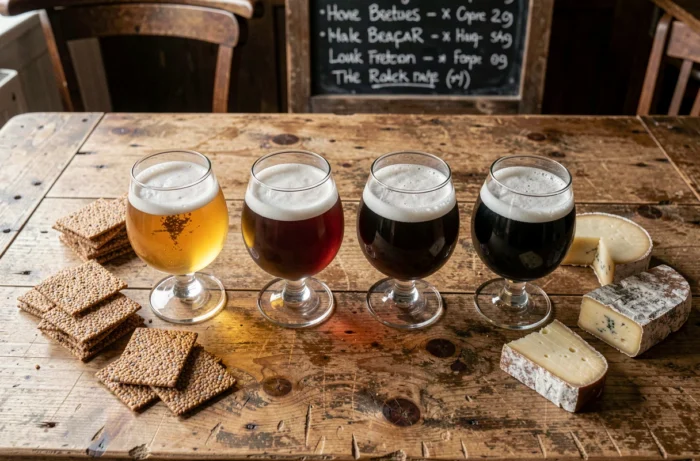
The term “artisanal” encompasses very different realities in Brittany. Brasserie Coreff, founded in 1985, is often presented as the oldest of the Breton microbreweries. It currently employs nearly fifty employees and produces about 100,000 hectoliters per year, with three production sites. At this scale, the boundary with an industrial brewery becomes porous.
Brasserie Lancelot follows a similar trajectory. It recently announced an investment to increase its production capacity in Brittany, a sign that local and national demand justifies growing volumes.
A Regulatory Blur on the Notion of Artisanal
In France, there is no legal definition that sets a production threshold beyond which a brewery ceases to be “artisanal.” The distinction relies more on methods (no systematic pasteurization, proprietary recipes, short supply chains) than on volumes. This ambiguity benefits structures that have grown without renouncing their original recipes, but it complicates readability for the consumer.
Brasserie de Sainte-Colombe, a pioneer in Ille-et-Vilaine with over thirty years of activity, illustrates this tension. It maintains a strong local anchorage while distributing well beyond its original canton.
Local Ingredients and Aromatic Profiles of Breton Beers
What distinguishes a Breton beer from a craft beer brewed elsewhere often lies in the ingredients. Several breweries in the region incorporate local products into their recipes that alter the aromas and structure of the beer.
- Buckwheat, a historical grain of Brittany, adds a slightly dry texture and nutty notes. It can be found in amber beers and special ales.
- Seaweeds harvested from the Finistère coast introduce a subtle salinity and iodized minerality, used in white beers or saisons.
- Honey and salted butter caramel, more anecdotal, are used in tasting beers positioned on the sweet-bitter spectrum.
These additions are not merely marketing. The choice of a local ingredient truly alters the taste profile and requires technical adjustments during brewing, particularly regarding fermentation temperatures and aging durations.
IPA, Organic, Blonde: What Breton Breweries Really Produce
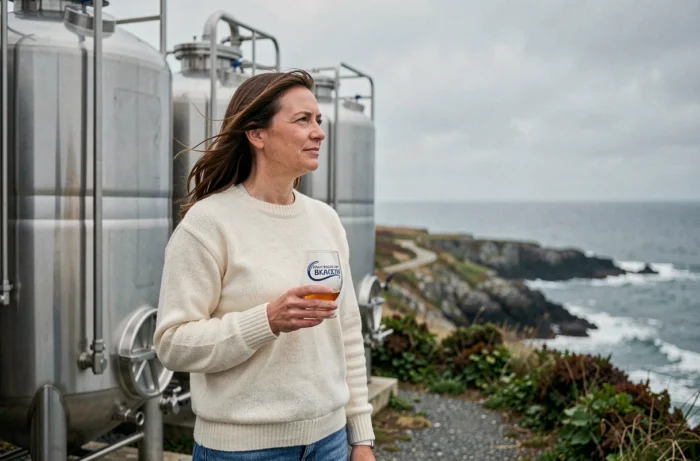
The trend for IPAs (India Pale Ales) has reached Brittany just like the rest of France. Many microbreweries offer at least one IPA in their range, often hopped with American or New Zealand varieties that bring bitterness and aromas of citrus or tropical fruits.
However, the best-selling beers in Brittany remain light blondes and ambers. The local audience, accustomed to consuming beer in volume (on terraces, during festivals), prefers accessible profiles, low in bitterness, with a moderate alcohol content.
Organic Production in Craft Breweries
Several Breton breweries display organic certification. This implies sourcing malted barley and hops from organic farming, which reduces the number of available suppliers and increases production costs. The additional cost of organic raw materials is reflected in the final price, often ranging from one to two euros more per 75 cl bottle compared to conventional craft beer.
Field feedback varies on this point: some brewers believe that organic customers are loyal and less price-sensitive, while others find that organic is no longer enough to differentiate a beer in a saturated market.
Buying and Tasting Craft Beer in Brittany
Distribution remains the key issue for small Breton breweries. Three channels coexist, each with distinct economic logics:
- Direct sales at the brewery, often coupled with tours and tastings, allow for the best margin but limit volumes.
- Wine shops and delicatessens, present in most Breton towns, play a prescriptive role. Their selection determines a brewery’s visibility.
- Large retailers, accessible to structures with sufficient production capacity, expose breweries to price pressure that erodes profitability.
Breweries that master their short circuit fare better against market fluctuations. Beer festivals, numerous in Brittany between May and September, also provide a seasonal showcase that generates word-of-mouth.
The Breton brewing sector is going through a maturation phase. New establishments are slowing down, pioneers are growing, and the quality of beers produced in the region has probably never been so consistent. What is at stake now is each brewery’s ability to maintain a clear taste identity in a market where consumers now have the choice between several dozen local references.