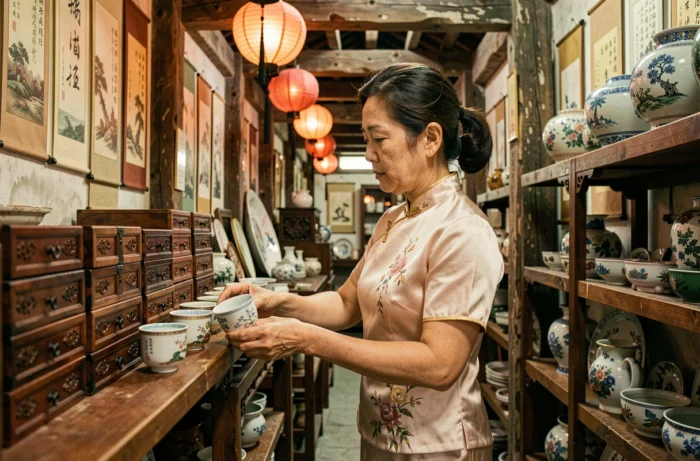
Guangzhou is not just about the Canton Tower and a cruise on the Pearl River. The city boasts a layered urban fabric, where each neighborhood maintains its own culinary, architectural, and commercial codes. Here, we focus on angles that traditional guides overlook or skim over.
Xihua Road and the Liwan Food Market Circuit
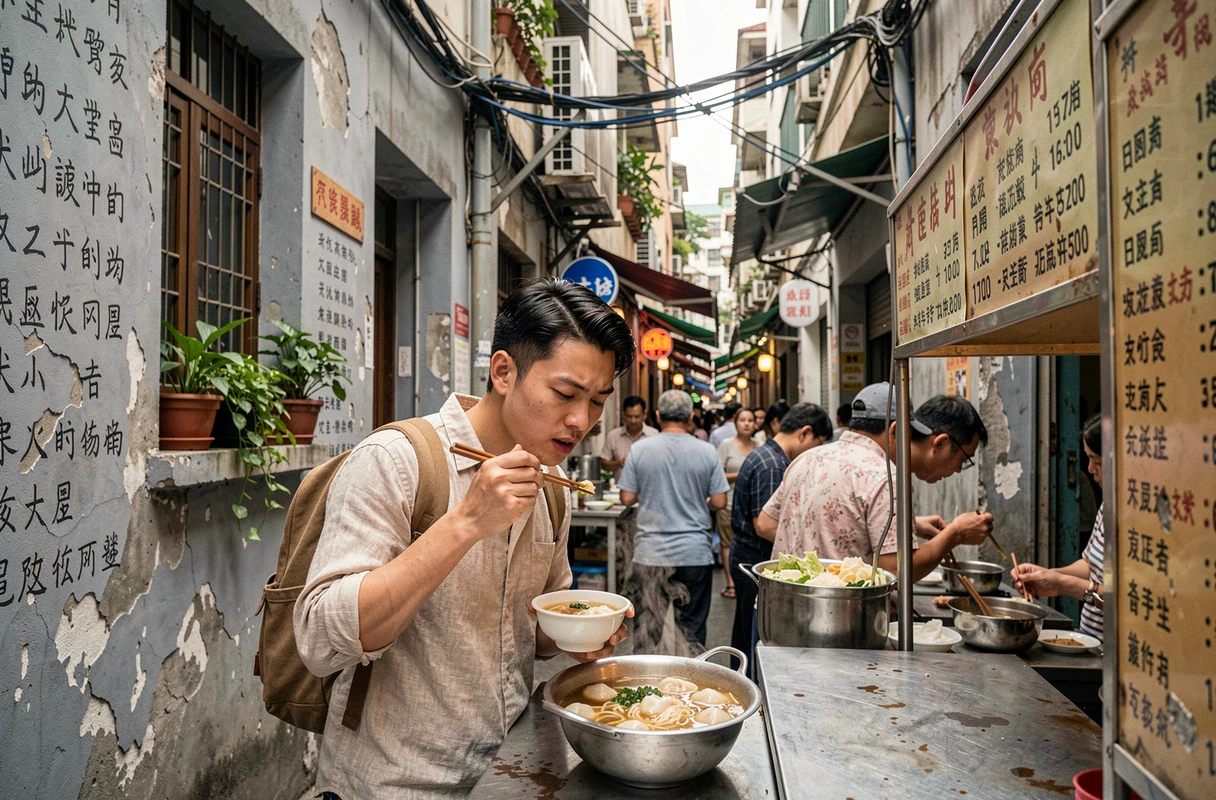
The Liwan district remains the densest area for understanding Cantonese cuisine outside of chain restaurants. Xihua Road features, within a few hundred meters, stalls selling dried fruits, medicinal herbs, fermented sauces, and freshly made steamed pastries.
This type of specialized street operates on a supply chain logic: each segment groups sellers of the same product, facilitating comparison and negotiation. Private food market tours, offered by several local operators, typically last two to five hours and include yum cha tastings in tea houses frequented exclusively by Cantonese locals.
Organizing an off-the-beaten-path stay in Guangzhou often involves these micro-local circuits, which are far more revealing than the standardized food courts of the Tianhe shopping mall.
Yuexiu and Cantonese Architectural Heritage: What Tourist Circuits Bypass
Yuexiu is known for its park and the statue of the Five Rams. We recommend bypassing these classics to explore the residential alleys south of the park, where qilou (Sino-colonial arcades) still exist in real use, not yet renovated for tourism.
These dual-function buildings, with shops on the ground floor and residences above, reflect the architectural influence of Guangdong from the 1920s-1930s. Their density in this area exceeds that of Shangxiajiu, the usually recommended pedestrian street, where renovations have smoothed out the details.
Neighborhood Temples Away from Visitor Flows
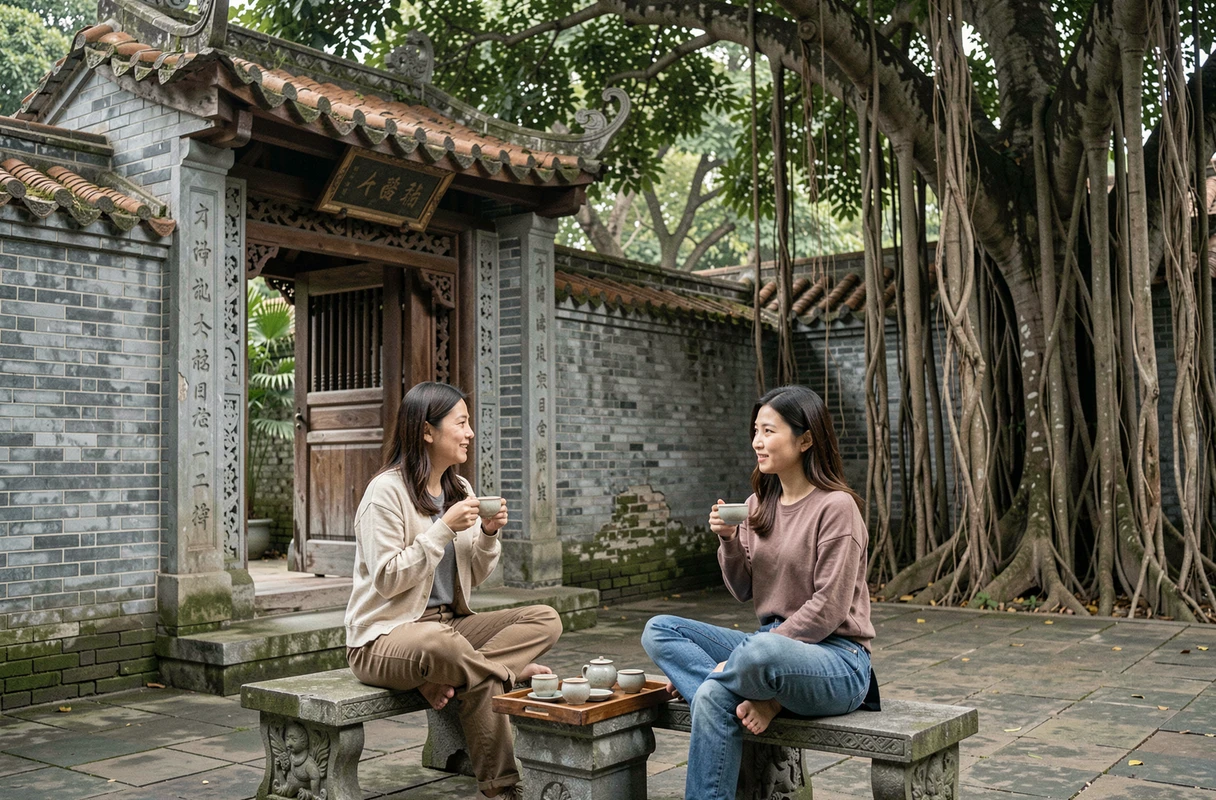
The Six Banyan Temple attracts the majority of visitors in Guangzhou. The neighborhood temples in Yuexiu and Liwan, more modest in scale, offer a radically different experience. No ticketing, no waiting lines: you observe daily practices, morning offerings, wish calligraphy, conversations among regulars.
These places function as vibrant community spaces, not as monuments. The difference is immediately noticeable in the atmosphere.
Conghua and Nature Retreats on the Outskirts of Guangzhou
The recent trend in Guangzhou is pushing informed travelers towards the northern outskirts of the metropolis. Conghua offers the most structured options for nature-oriented weekend getaways, nestled between mountainous areas and dense forest cover.
The area is accessible by urban transport from the city center, distinguishing it from more remote rural destinations in Guangdong like Foshan or Shenzhen, which require a change in travel logic.
- Natural hot springs operated by local establishments, often absent from international booking platforms
- Marked forest trails in little-visited parks, suitable for half-day hikes
- Suburban villages where the production of lychees and longans still shapes the local calendar
Conghua acts as a buffer zone between two urban sequences. We systematically include it in an itinerary of more than three days.
Formalities to Anticipate for an Extended Stay in Guangdong
China has extended the 30-day visa exemption for ordinary French passports until December 31, 2026. The 240-hour visa-free transit, unified nationwide since December 17, 2024, applies at Baiyun airport, allowing a stop in Guangzhou even as part of a multi-destination trip.
A often overlooked point: registration at the police station is mandatory within 48 hours of arrival. This free procedure applies to all foreign travelers and is essential for the legality of the stay. Hotels do this automatically, but staying with locals or renting requires personal action.
SIM Card and Local Apps
Without a VPN set up before departure, access to Google services, WhatsApp, or Instagram will be blocked. Chinese navigation (Amap) and payment (Alipay in international version) apps are more reliable on-site than their Western counterparts.
- Amap for pedestrian navigation and public transport, with precise geolocation of bus stops
- Alipay for everyday payments, including in street markets where cash is becoming scarce
- Didi for car rides, with an interface available in English
Guangzhou rewards visitors who go beyond the marked circuits. The neighborhoods of Liwan and Yuexiu offer direct access to everyday Cantonese culture, while Conghua extends the experience into a rural dimension rarely associated with this Guangdong megacity. The ease of access via Baiyun and the visa exemption framework make this type of stay more accessible than ever for French travelers.