The European regulatory framework governing the products and materials present in our interiors is tightening. Taking care of your home on a daily basis is no longer just about cleaning: it involves understanding what the products used contain, how surfaces react, and what maintenance mistakes silently degrade a home.
Formaldehyde emissions from furniture: a maintenance parameter often overlooked
Furniture made from engineered wood emits formaldehyde, a volatile organic compound that irritates the respiratory tract. The Regulation (EU) 2023/1464, applicable from August 6, 2026, imposes new emission limits measured according to the harmonized method EN 16516. New furniture sold on the European market will have to comply with lower thresholds than before.
We recommend ventilating any room containing recent furniture for several weeks after purchase. Formaldehyde is primarily released in the first few months, and daily ventilation for fifteen minutes significantly reduces indoor concentration.
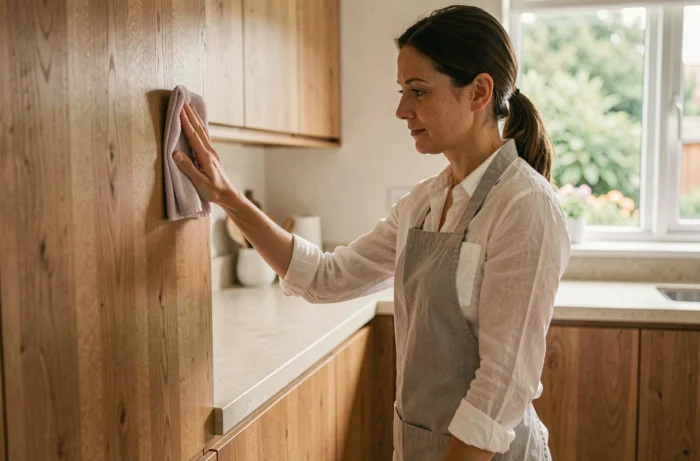
Another often neglected point: cleaning products applied to melamine or laminate surfaces can interact with the resins in the panels. Avoid ammonia-based detergents on these surfaces. A damp microfiber cloth, without adding any product, is sufficient for regular dusting and preserves the protective layer of the furniture.
This approach, which intersects indoor air quality and surface maintenance, represents an angle that most cleaning guides overlook. Several specialized resources delve into this topic in depth, including the home page on Insider Infos, which addresses various aspects of housing.
Detergents and surfactants: what Regulation (EU) 2026/405 changes for domestic cleaning
The Regulation (EU) 2026/405 on detergents and surfactants overhauls the requirements for biodegradability and further restricts phosphates in laundry detergents and dishwasher tablets. It also introduces a digital product passport that will allow tracking of the exact composition of each marketed reference.
For daily home maintenance, this means that formulations will evolve. Some current multi-surface products will disappear or be reformulated. We are already observing a shift towards plant-based surfactants, which are less aggressive on silicone joints and varnished surfaces.
Adapting household products to new formulations
A reformulated detergent to meet enhanced biodegradability thresholds may be less effective on cooked grease if the water temperature is too low. The solution: always work with lukewarm water between 35 and 45 degrees to compensate for the reduced chemical aggressiveness of the surfactant.
On stainless steel or natural stone surfaces, white vinegar remains an ally, but it attacks marble and limestone. We recommend testing any product on a discreet area before applying it to a larger surface, especially during the transition period between old and new formulations.
Floor maintenance: method and frequency according to the covering
Slow vacuuming is gaining visibility. The principle is simple: slow down the brush’s movement to allow the airflow to dislodge particles embedded in the fibers. On carpets or thick rugs, a slow pass captures significantly more dust than a quick back-and-forth motion.
- Tiles and ceramic stoneware: a weekly wash with black soap diluted in warm water is sufficient. Avoid self-polishing products that leave a slippery film and attract dust.
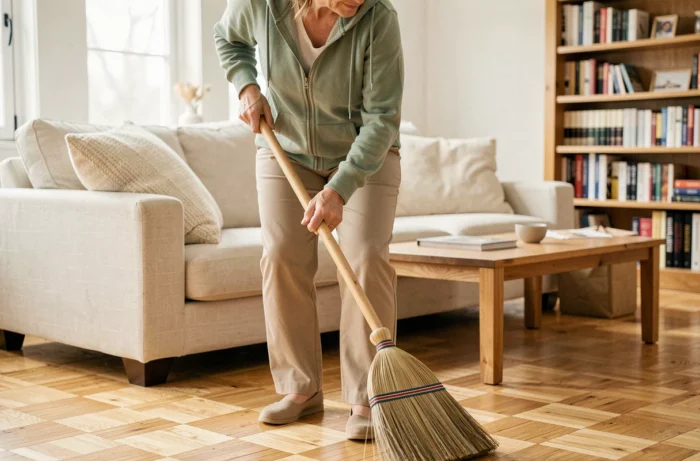
- Varnished parquet: gentle vacuuming without a rotating brush, followed by a barely damp mop. Excess water seeps between the planks and causes the wood to swell.
- Vinyl or linoleum floors: clean with neutral pH. Alkaline detergents damage the wear layer and dull the covering within a few months.
- Waxed concrete: a pass with clear water and a renewed water-repellent treatment once or twice a year protects the surface from absorption stains.
Adapting the method to the covering avoids invisible degradation that only reveals itself after several years of inappropriate maintenance.
Kitchen and bathroom: maintenance mistakes that cost a lot
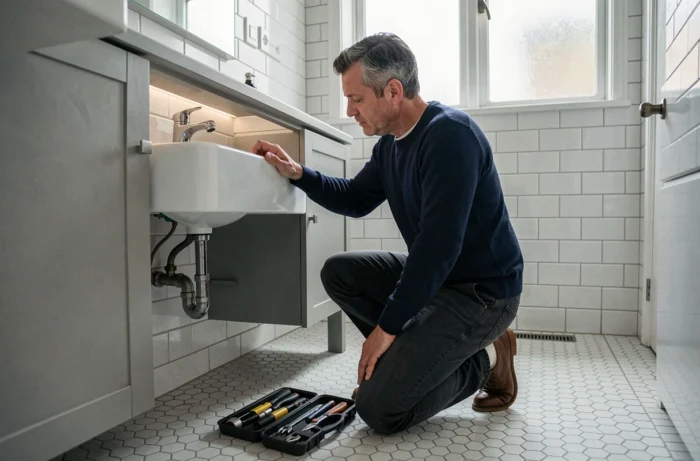
Bathroom silicone joints often blacken due to mold growth on the surface, but also beneath. Applying bleach to a moldy joint does not solve anything if ventilation is insufficient: the problem returns in a few weeks. The sustainable solution involves a functional mechanical ventilation system and replacing the joint every five to seven years.
In the kitchen, ceramic and induction cooktops scratch with abrasive sponges. A specific blade scraper, used at a shallow angle, removes burnt residues without damaging the glass. Baking soda paste (mixed with a little water) effectively degreases surfaces without scratching them.
Faucets and limescale: act before it builds up
Limescale is easily removed as long as it remains a superficial deposit. Once embedded in faucet aerators, it reduces flow and promotes bacterial growth. We recommend soaking aerators in pure white vinegar for an hour once a month.
Washing machine filters deserve quarterly checks. A clogged filter increases water consumption, degrades rinse quality, and shortens the appliance’s lifespan. Consulting the manufacturer’s manual to locate and clean this filter remains the most cost-effective precaution.
Maintaining a home relies less on the amount of time spent than on the relevance of the actions taken. Knowing your materials, adjusting your products to new standards, and intervening at the right time on critical points (joints, filters, ventilation) protects the structure as well as the quality of life.