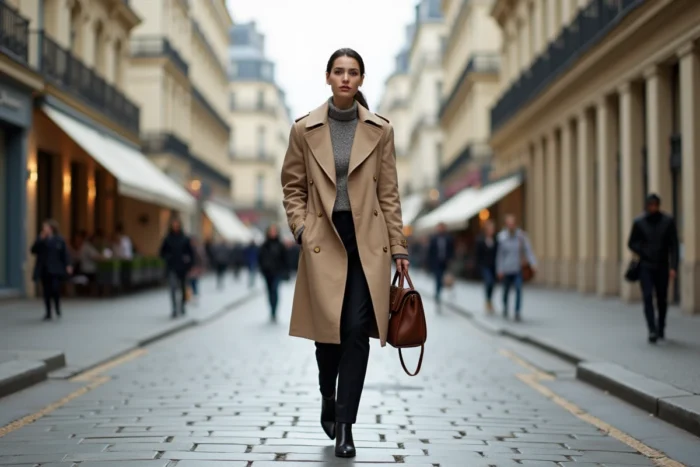
Parisian fashion is less read on official runways than in the interstices between two seasons, where distribution circuits, ephemeral formats, and dress codes are recomposed. We have observed for several seasons a shift in the places of prescription, from major houses to hybrid players who blur the boundaries between luxury, ready-to-wear, and streetwear.
Pop-up stores and ephemeral fashion events in Paris: a structural distribution channel
The pop-up is no longer a one-off marketing stunt. In Paris, ephemeral fashion events (temporary exhibitions, private sales by designers, gallery installations) have multiplied to the point of constituting a true parallel distribution circuit.
This format allows emerging brands to test a pricing position and a clientele without bearing the cost of a commercial lease in the Marais or around the Place Saint-Germain. For the discerning consumer, these events concentrate limited edition pieces, often absent from permanent stores.
We are closely following this evolution, documented notably by specialized agendas that list every month the pop-ups and fashion deals in Île-de-France. The designers who publish their collections in the fashion section of Paris Blogged illustrate this dynamic well: a mix of ground scouting, vintage, and pieces from young Parisian brands.
The ephemeral model presents a technical advantage for brands: no dormant stock, no unsold items to manage under the AGEC law. Production is calibrated to actual demand, which reduces waste and aligns the business model with regulatory constraints against the destruction of unsold non-food items.
Independent fashion scene in Paris: off shows and designer incubators
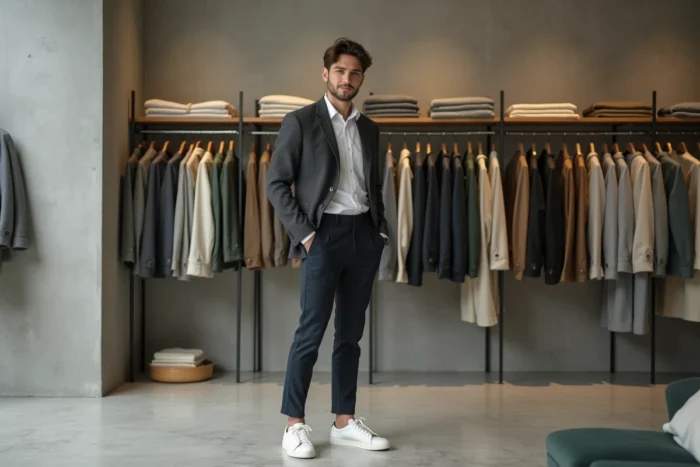
The shows organized on the sidelines of the official Fashion Week have changed status. They are no longer confidential events reserved for fashion students. Structures like the Fashion Incubator of Mod’Spe Paris organize presentations that bring together several emerging designers in front of a mixed audience (professionals, enthusiasts, independent buyers).
These off formats structure an accessible Parisian scene, where the shows of major houses remain invitation-only. The Rencontres de la Mode, for example, position their brands between luxury and ready-to-wear, with a discourse that integrates social and gender transformations through clothing.
What distinguishes this scene from a simple trade show:
- An open access to the general public, sometimes free, with immersive formats (workshops, participatory juries, short training sessions)
- Collections that do not follow the classic biannual calendar, preferring irregular drops based on material availability
- A hybridization between design, contemporary art, and streetwear, visible in the Marais and around Saint-Germain
For enthusiasts who want to go beyond surface shopping, these off events represent the true creative pulse of the capital.
Return of the 90s and polarization of the Parisian fashion market
The minimalism of the 90s is making a strong comeback this summer. Iconic pieces, clean cuts, neutral palettes: this trend does not surprise industry professionals, but its magnitude deserves attention. Parisian luxury brands and independent labels are simultaneously seizing it, creating a rare stylistic convergence between very distant price segments.
At the same time, the French clothing market shows signs of polarization. Sector revenues are experiencing a slight overall decline, but this average masks opposing dynamics. Luxury and vintage are performing well, while the classic mid-range is declining.
This polarization is concretely reflected in Parisian boutiques:
- Vintage stores in the eastern neighborhoods (Marais, Oberkampf) are seeing increased foot traffic, driven by a clientele seeking authentic 90s pieces
- Concept stores blending local designers and international streetwear are capturing a growing share of fashion budgets
- Major mid-range ready-to-wear brands are reducing their retail space or migrating to ephemeral formats
Vintage is no longer a niche but a fully-fledged distribution channel in the capital. Parisian thrift stores have professionalized their sourcing, merchandising, and communication, to the point of competing with first-hand boutiques in terms of customer experience.
Fashion neighborhoods of Paris: the real geography of prescribers in 2026
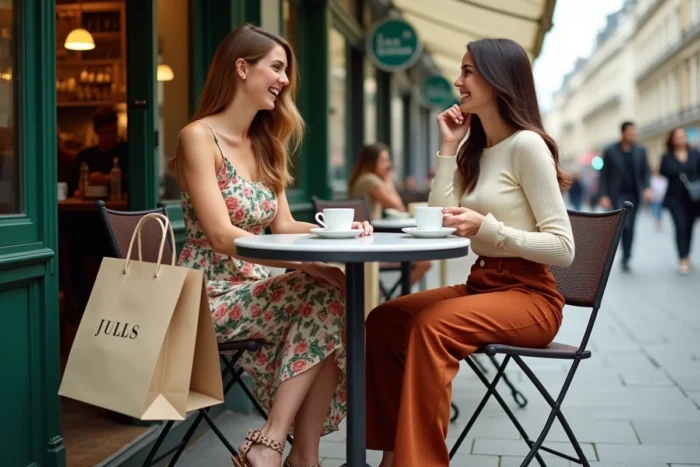
Tourist guides continue to mention the Champs-Élysées and Avenue Montaigne. These addresses remain relevant for institutional luxury, but fashion prescription has shifted towards micro-neighborhoods that mainstream articles rarely mention with precision.
The upper Marais (around Rue de Bretagne) concentrates a density of independent boutiques, designer workshops, and galleries that function in an ecosystem. A purchase there often engages a direct relationship with the designer, which does not exist in traditional circuits.
Saint-Germain-des-Prés retains its role for design brands that intersect fashion and furniture, a fundamental trend that blurs categories. There, capsule collections are conceived as objects, with attention to materials and finishes that recalls craftsmanship more than fast fashion.
The northeast of Paris (Canal Saint-Martin, Belleville) attracts a new generation of streetwear brands that produce in small batches and communicate primarily via Instagram. Their economic model relies on limited drops and a loyal community, without a permanent storefront.
The fashion map of Paris no longer overlaps with the luxury map. Knowing where to search, when, and in what format (store, pop-up, off show, workshop sale) has now become a skill in itself for anyone wanting to understand Parisian fashion beyond the shop windows.