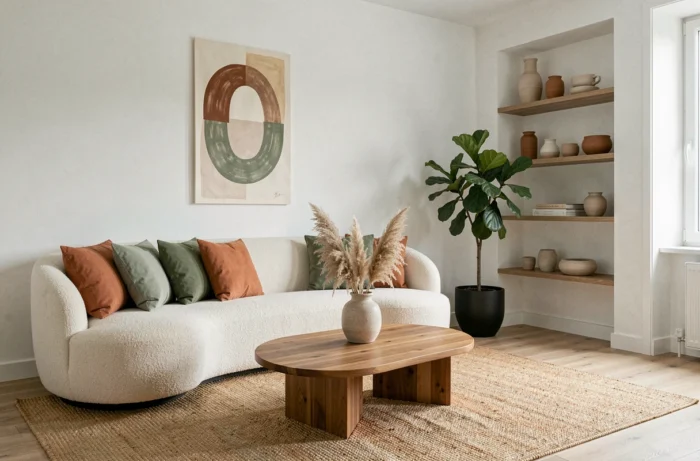
Indoor palettes have shifted. Since 2024, cool grays and clinical whites have receded in favor of earthy tones and deep greens, an evolution confirmed by several trend analyses published between 2025 and 2026. This chromatic shift reflects a broader change: interior decoration no longer merely dresses a space; it embodies choices regarding the sustainability of materials, the traceability of objects, and how a place reflects a lifestyle.
European Regulation on Ecodesign: What Changes for Furniture
The regulation (EU) 2024/1781 on the ecodesign of sustainable products, which came into effect on July 18, 2024, fundamentally alters the rules of the game for the furniture sector. This legislation extends ecodesign requirements to nearly all physical goods, including furniture and decorative objects.
A specific delegated act for furniture is expected in 2028, with probable compliance around 2029-2030. In practical terms, this means that manufacturers will need to integrate formal criteria for sustainability, reparability, and recyclability into their products. The digital product passport, provided for by this regulation, will make this information accessible to consumers.
For those interested in decor today, this regulatory trajectory has a direct implication: objects designed to last and whose production is traceable will gradually become the norm, not just a marketing argument. Choosing certified solid wood furniture or a repairable light fixture is anticipating a tightening framework. Those exploring the decor offered by Happy Space will find pieces that already align with this logic of sustainability and personalization.
Trending Colors 2026: Terracotta, Ochre, and Deep Greens Replace Gray
The chromatic shift observed since 2024 has been confirmed. Analyses published by Inspir-deco, KSL Living, Trendalytics, and 20 Minutes converge: earthy tones (terracotta, ochre, clay) and deep greens are establishing themselves as the dominant palettes for 2026.

This movement is not merely a fashion cycle. Earthy shades function as background colors that warm a space without saturating it. A soft ochre wall in a living room alters the perception of natural light in a significantly different way than a light gray wall, which tends to flatten volumes.
Deep greens, on the other hand, create a visual anchoring effect. Used on a wall, a sofa, or textiles, they introduce a connection with the outdoors without resorting to indoor plants. Field feedback varies on the ease of pairing these shades with existing furniture: a forest green works well with light wood or brass but can weigh down a poorly lit space.
The challenge is not to repaint every room. A terracotta linen cushion, an ochre stoneware vase, or a fir green throw are enough to anchor an interior in this palette without heavy commitment.
Raw Materials and Craftsmanship: Unique Decor Through Texture
Untreated wood, natural stone, terracotta, raw linen, polished concrete: materials that retain their original texture are increasingly occupying spaces. This trend aligns with the regulatory logic of ecodesign, but it also responds to a sensory need. An object whose material can be felt creates a different relationship with the space.
Craftsmanship and handmade items enhance this dimension. A hand-turned ceramic, a textile woven with visible irregularities, or a wooden piece with apparent grains introduce what competitors often call “personalization,” but which is more about uniqueness through craftsmanship. Two handcrafted pieces are never identical, fundamentally distinguishing them from an industrial object.
- Solid wood (oak, walnut, ash) remains the most versatile material for sustainable decor, provided its origin and forest certification are verified.
- Terracotta and stoneware, used in tiling or decorative objects, bring a visual warmth that industrial tiles do not replicate.
- Linen and hemp, in upholstery textiles, age better than synthetic fibers and align with future recyclability requirements.
AI Tools in Interior Decoration: Current Promises and Limits
The 2026 trends signal the rise of AI-assisted design tools. Several platforms now offer the ability to visualize a reconfigured interior from a photo, altering colors, furniture, or layout in just a few clicks.

The interest is real for initial exploration. Testing a terracotta wall in your living room before buying the paint, or visualizing a deep green sofa in an existing space, helps avoid costly mistakes. The available data does not yet allow for conclusions about the colorimetric reliability of these tools: the gap between screen rendering and reality remains variable depending on the applications.
The main limitation lies in texture. An algorithm can simulate the color of a polished concrete wall, but not the tactile sensation or the play of light on an irregular surface. For raw and artisanal materials, the tool remains a complement, not a substitute for physical observation.
- AI mood generators are useful for validating a color direction before purchase.
- The simulation of textures and natural materials remains approximate on most consumer tools.
- No tool replaces visiting a showroom or workshop to evaluate a handcrafted material.
Unique decor cannot be decreed by a digital filter. It is built through an accumulation of concrete choices: a material whose origin is known, a color tested in the actual light of the room, an object whose production leaves a visible trace. Tools are evolving, the regulatory framework is clarifying, but the criterion that distinguishes a successful interior from a generic one remains the same: each chosen piece tells something specific.